

To clean acrylic patio windows, gently rinse away loose dirt, wash with mild soap and lukewarm water using a clean, soft cloth, rinse again, and blot dry. Keep the surface wet, use light pressure, and take your time. That gentle approach helps preserve the clear view you love.
Think of your acrylic panels like a favorite pair of eyeglasses: you would not rub dusty lenses with a rough towel. Acrylic scratches easily, too. The comparison is about careful handling—not using eyeglass cleaner, which may contain ingredients unsuitable for your panels.
Before you start: check your panel type
This guide is for acrylic patio windows and sunroom panels, sometimes called plexiglass. Flexible vinyl windows, glass, and specially coated panels may have different care instructions. Follow your enclosure manufacturer’s directions first. If you are unsure what you have, ask your installer before applying a cleaner.
What you need to clean acrylic windows
- Lukewarm water and a small amount of mild soap or detergent approved for your panels.
- Brand-new, high-quality, acrylic-safe microfiber cloths for every routine cleaning. Choose soft, nonabrasive, lint-free cloths approved for your panels; inspect them for grit before use.
- Clean rinse water and a separate soft, damp cloth for blotting.
- A little patience—scrubbing harder is not the solution.
Start fresh with your microfiber cloths
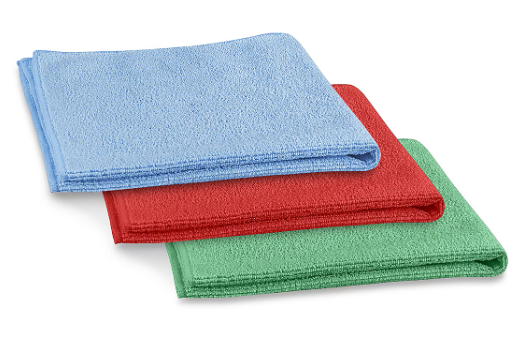
DR Impact Co recommends starting with brand-new cloths every time you wash your acrylic patio windows. A cloth used on a car, countertop, frame or floor may carry grit that can scratch the panels. Keep fresh cloths protected from sand and dust, and use separate cloths for the panels, frames and tracks. If a cloth falls on the ground or picks up grit, set it aside and use another new cloth.
Take your time. Even a soft, new cloth can drag sand across the surface if you skip the rinse. For NOVUS polishing, use the cloth type specified below rather than assuming every microfiber is suitable.
Never start by wiping a dusty panel dry.
How to clean acrylic patio windows: 4 simple steps
1. Rinse hands-free before touching the acrylic
Let clean water do the first work. Gently rinse the panels from top to bottom without wiping, brushing or touching the surface. Wash away as much loose sand, grit and debris as possible before a cloth comes near the acrylic. Where your enclosure instructions permit, use a gentle flow of water—not a pressure washer or forceful jet—and protect nearby furnishings.
Do not rub stubborn grit to loosen it. Rinse again and allow it to lift away. Sand trapped under a cloth can act like sandpaper. Work on one manageable section at a time and keep the surface wet.
2. Wash gently with mild soapy water
Dampen your cloth and use light pressure. Keep both the cloth and the panel wet. Turn the cloth to a clean area often. If it picks up dirt or grit, stop and switch to another brand-new cloth. Test any new cleaning product in a small, inconspicuous area first.
3. Rinse off the soap
Use clean water to remove the soap and loosened dirt. Do not let dirty wash water dry on the panel. Take care around frames, tracks, seals, and nearby furnishings, following the enclosure’s care instructions.
4. Blot dry with a soft, damp cloth
Blot rather than buffing aggressively. Resist the urge to keep rubbing a stubborn spot. A clean view comes from removing the dirt gently, not polishing with extra force.
What should you avoid on acrylic?
- Ordinary glass and window cleaners unless specifically approved by the acrylic manufacturer.
- Alcohol, ammonia, acetone, and strong solvents that may damage the surface.
- Scouring pads, abrasive powders, rough towels, and gritty cloths.
- Dry dusting or forceful scrubbing. Even a soft cloth can scratch when dirt is trapped underneath.
“Ammonia-free” alone does not mean a cleaner is acrylic-safe. Check the full product instructions and your panel manufacturer’s recommendations.
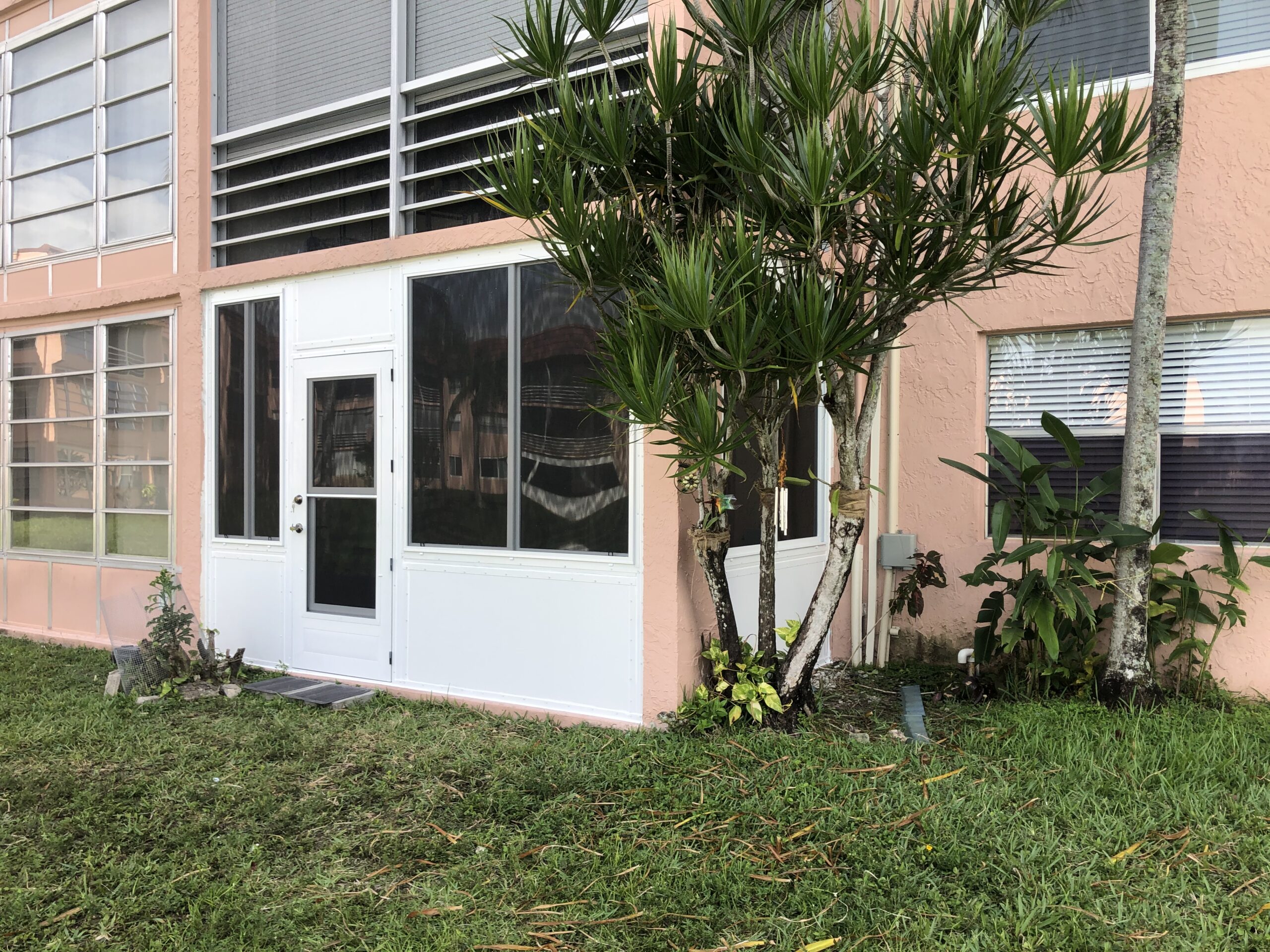
Using NOVUS to clean acrylic and remove light scratches
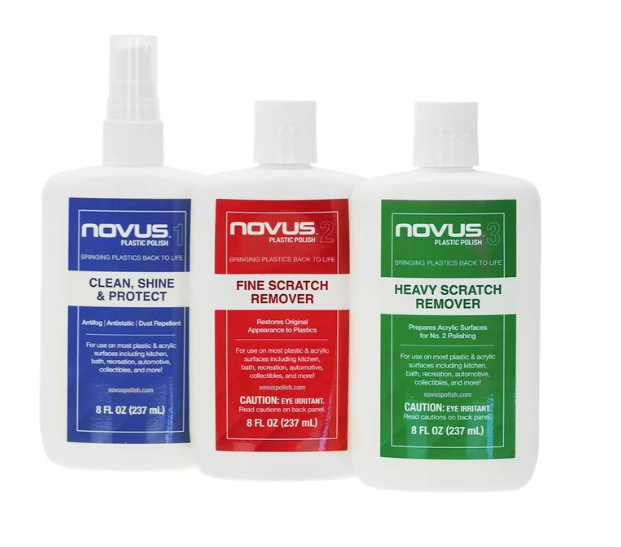
Check your panel manufacturer’s approval before using NOVUS. The products shown have different jobs:
- Blue bottle — NOVUS #1: A nonabrasive cleaner and shine/protection product that helps repel dust and reduce static. It does not remove scratches.
- Red bottle — NOVUS #2: A polish for fine scratches, haze and abrasions on compatible plastics. It is not recommended for coated plastics.
- Green bottle — NOVUS #3: A heavy-scratch remover, not an everyday cleaner. Ask your installer about deeper damage before attempting this treatment.
How to approach light scratches with NOVUS #2
- Remove grit and clean the panel first. NOVUS specifies #1 before #2 when the surface is dirty.
- Shake #2 and test a small, hidden area. Follow its label’s polishing directions, keeping the approved cloth supplied with polish.
- Follow the label’s finishing and buffing steps with a clean cloth section, then finish with #1.
See NOVUS’s full product-by-product instructions. Scratch polishing is separate from routine gentle washing; do not scrub a dirty panel to try to remove scratches.
Stubborn spots or deeper scratches? Pause before scrubbing
If gentle washing does not lift a spot, check your panel manufacturer’s approved method. Do not scrape acrylic or experiment with household solvents. Deep scratches, widespread cloudiness or an unknown coating deserve an installer’s assessment before treatment. Polishing cannot guarantee that every scratch will disappear, and a cleaner does not make acrylic scratch-proof.
Common acrylic window cleaning questions
Can I clean acrylic with regular window spray?
Do not assume that a cleaner made for glass is safe for acrylic. Mild soap and lukewarm water are the starting point, subject to your panel manufacturer’s instructions.
Can I use eyeglass cleaner?
Not simply because we compare acrylic care to eyeglass care. Use only a product approved for your acrylic panels. The key lesson is to remove grit first and handle the surface gently.
How often should I clean my acrylic patio enclosure?
Check the panels regularly and clean when dirt begins to build up. Your location, weather, and exposure affect the schedule. For South Florida homes, pay attention after windy weather brings dust or debris onto the enclosure.
Will washing remove scratches?
Washing removes dirt; it does not repair scratches. An approved polish such as NOVUS #2 may address fine surface scratches on compatible, uncoated acrylic. Follow the product and panel instructions, and ask your installer about deeper damage. Never try to remove a scratch by scrubbing during routine washing.
Enjoy your view—with a little extra care
Treat acrylic like delicate lenses: rinse first, use a clean soft cloth, and take your time. A few careful minutes are better than rushing and leaving scratches behind.
Have questions about your enclosure or planning a new space? Explore DR Impact Co acrylic sunrooms and patio enclosures, contact our team, or call 954-508-2616. We serve homeowners in Broward County and West Palm Beach.
Care reference: ACRYLITE guidance for caring for and cleaning acrylic sheet. Always follow the instructions for your specific enclosure.